
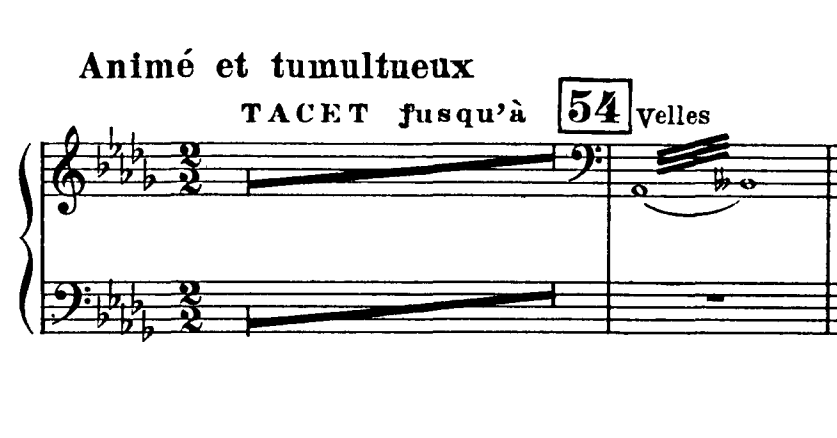
the harpist's tacet
on getting nothing done while you're waiting to do something

Hello, all,
Sorry for the delayed response. Things have been really busy over the past few weeks.
Yes, every working individual recognizes this common email refrain, so oft typed that the words become etched into the muscle memory of our fingers. Indeed, I apologize for this sustained silence, this tacet that every orchestral harpist learns to embody. There were many weeks this semester that I felt inspired to write, but as many of you know, cogency tends to be evasive in the face of stress.
One of the words I keep encountering in Lauren Berlant’s Cruel Optimism is “abeyance.” Merriam-Webster Dictionary defines “abeyance” as “a state of temporary inactivity, suspension.” Abeyance highlights the micro, the un-heroic, the mundane, the sheer repetition of staying alive. We are not so much dragon-slaying Siegfrieds as we are bureaucracy-resisting Bartlebys.
It’s unfortunate that abeyance in the artist today is a double-edged sword: suspension of creative activity is usually not a sign of laziness, but a symptom of too much managerial work (and vice versa). Although Nico Muhly’s social media tells me that the consummate musician in 2025 should be an artistic genius and have zero unread messages in their inbox.
I have 8,076. (at least they’re mostly spam)
So, allow me to explain that number by updating you all on my life.
996工作制 (996 working hour system)
This past semester, I started a second job teaching at the Curtis Institute of Music, where I joined Elizabeth Hainen as harp faculty. To all the harpists who clutched their pearls (including one Saul Davis Zlatkovski) when the announcement was made, I suspect I was tapped for other reasons, namely my secondary expertise in teaching entrepreneurship. Like every US music program in 2025, Curtis is trying to update its curriculum, so in addition to teaching harp this year, I was invited to sit on the steering committee for its new Curtis Center for Leadership, Innovation, and Partnership. The committee comprises an interesting group of people from orchestra/opera leadership, higher ed, new music, and tech.
On the harp end, I’ve been commuting from Tallahassee to Philadelphia every few weeks, but the teaching has been great (my student Maya made finals for her first professional orchestra audition!). I love working with the harp students there, including with students from Temple University who join for studio classes, and I hope that as the rhythm of commuting stabilizes, I can get to know more musicians in Philadelphia.

At FSU, business has been more or less as usual. I’m grateful for a full studio (6 majors and 4 elective students), and my entrepreneurship class continues to stimulate ideas for better entrepreneurship pedagogy. On top of that and Curtis teaching, I also co-taught a music and social theory/philosophy course, which will continue into the spring. Admittedly, that class engendered a not insignificant amount of creative abeyance: there were weeks I definitely practiced less because the reading (Hegel especially…) took up too much time.
Finally, the primary source of managerial angst: chairing a committee that is responsible for basically every new initiative we’re trying to implement at FSU. A full-time academic position has its pros and cons. Pros are job security (sort of), a salary and decent retirement benefits, a flexible schedule with three months off (unpaid) in the summer, and enough freedom to balance a performing career on top of teaching. Cons? Depending on the school and an individual’s level of administrative competence, one might become saddled with too much responsibility too early.
Typically, a junior (pre-tenure) faculty member such as myself is protected from such committee work; the expectation to allow time and space to prepare a strong tenure portfolio during the probation period (4 to 6 years). However, somehow I’ve found myself in the role of leading a committee through the roll-out of one new undergraduate degree program, the development of a new graduate degree, and the revision of the music entrepreneurship curriculum. Hello, 12 to 16-hour workdays and often 7-day work weeks. Good-bye, creative life!
Did I mention that I had shingles and the flu at the same time in September?
awakening to a wake
I love playing the harp, and I love making music and dreaming of new ideas for music to make.
A few days ago, I told my colleague Mauricio, who sits on this FSU committee, that I’m increasingly feeling the itch to develop artistic projects that have more longevity than a single concert. My husband and I have been toying with the idea of starting our own independent production house (in Canada), which would something very new to both of us and would consume quite a lot of time and energy. Whether that actually happens in up in the air—suspended/abeyant if you will.
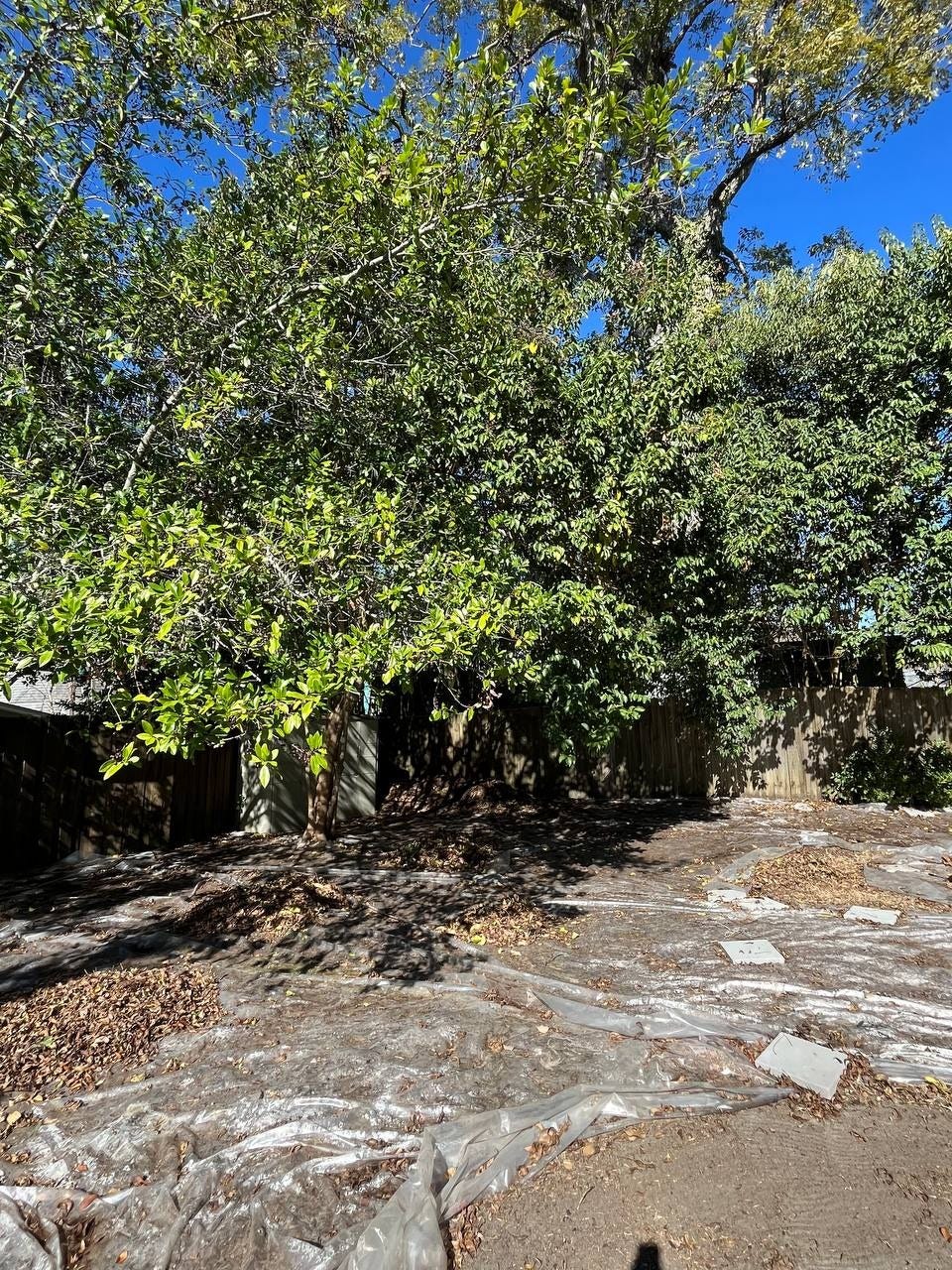
In the spring, I look forward to premiering my new program “The Flowers of Evil (Les Fleurs du Mal),” which is the closest I will ever get to a climate crisis commentary since you all know how I feel about that from a previous post. On the program are transcriptions (Rachmaninoff’s Lilacs, Puccini’s Chrysanthemums), contemporary works (Nørgard’s Flot Ut Rosa, Gabriel Jenks’s (formerly Hannah Lash) Stalk, and Cliff Callender’s Arches and Strings, and works of proto-modernist sensibility (Wagner’s Isoldes Liebestod, Fauré’s Une châtelaine en sa tour… which is an instrumental setting of Verlaine’s poem). This is the first program I am super x5 excited about and plan to make a commercial recording of it in the future.
And psst… I will be performing this program (or some version of it) in the following cities next year: Nashville, Tallahassee, Auckland (NZ), Vancouver (BC), Bethesda (MD), Winston-Salem, Elora, and more to be announced as I work on bookings. If you’re interested in presenting this program, please contact me!
This program reflects my longstanding preoccupation with chromaticism, especially chromaticism on the pedal harp (a real mechanical feat of feet), as an aesthetic meditation on modernity and modern life. Exemplary of that sentiment is Baudelaire’s Les Fleurs du Mal, in which the urban contaminates the idyllic, and Cain casts God down to earth. Chromaticism signifies a sort of perversion, a dirtying of the diatonic, that yields a difficult type of exquisite beauty.
Montrant leurs seins pendants et leurs robes ouvertes,
Des femmes se tordaient sous le noir firmament,
Et, comme un grand troupeau de victimes offertes,
Derrière lui traînaient un long mugissement.Showing their pendent breasts and their unfastened gowns
Women writhed and twisted under the black heavens,
And like a great flock of sacrificial victims,
A continuous groan trailed along in the wake.- “Don Juan aux enfers,” Charles Baudelaire
Is learning all this chromatic music just a coping mechanism for bearing my own weight in the world? Perhaps. Berlant argues that we are perpetually experiencing “slow death, a condition of being worn out by the activity of reproducing life.” This past semester has often felt like slow death, between my commuting-by-air situation (the airport is a very abeyance-inducing site), endless administrating/emailing, reading the news, worrying about my students’ professional prospects, fretting over my own career prospects, managing the emotional toll of a long-distance relationship…
However, Berlant offers a palliative sequel. Against (or amidst) slow death, our “agency can be an activity of maintenance, not making; fantasy, without grandiosity; sentience without full intentionality; inconsistency, without shattering; and embodying, alongside embodiment.”
Maybe creative abeyance isn’t a total suspension from creating art in the face of administrative drudgery. The two don’t exist in opposition because the struggle of not making anything is itself the making of a life.
Maybe for artists, every form of maintaining life is a creative act, and every creative act, a form of maintaining life.
Until next time,
Noël
The Corner of Wondrous and Powerful
👂🏼 I’m listening to Oneohtrix Point Never’s latest album, but ALSO I can’t stop listening to “Take Me Dancing” (Doja Cat, ft. SZA), just for SZA’s line “Baby, take me dancing tonight.” It’s pure hypnotic and dreamy nostalgia—one could call it the recollection of a subjunctive memory, or to borrow from Berlant, of a “future anteriority” (or Dua Lipa, “future nostalgia”)
📚 As the AI craze continues: my colleague Erol recommended this Current Affairs article on AI and higher ed.
👀 Patrick and I watched Kind Hearts and Coronets (1949) last night. Delightful, hilariously dark British comedy with no shortage of memorable quips and Alec Guinness playing 8 characters, including the suffragette Lady Agatha D’Ascoyne. Highly recommend.
Thanks for writing this, it clarifies a lot; your analytical dissection of abeyance, particularly in the context of the unrelenting 996 work system, offers a profoundly resonant articulatin of the creative suspension so many of us experiece.